
The Source for Survivors
  • Home
  • About the Pathways Model
  • Find Your Pathway
    • Pathway for Survivors >
      • Blog - Pathway for Survivors
      • The Pathway for Survivors Mini-Journal
    • Pathway for Community Supports >
      • Blog - Pathway for Community Supports
  • Financial Abuse Recovery Book
  • Other Resources
  • About Christine Murray
  • Contact Form
  • Sign Up for Our E-Newsletter
Picture

The Pathways for Supporting Survivors Model:
6 Commitments for Survivors of Abuse and Community Support Resources
Picture
By Christine Murray

Discover The Pathways for Supporting Survivors Model, a guiding framework that empowers individuals on their journey to recovery from abuse. This model introduces 6 essential commitments for survivors, providing a roadmap for personal growth and healing. Additionally, it describes 6 commitments for community supports that are dedicated to adopting a survivor-centered approach and fostering a supportive, understanding context that empowers and uplifts survivors. 

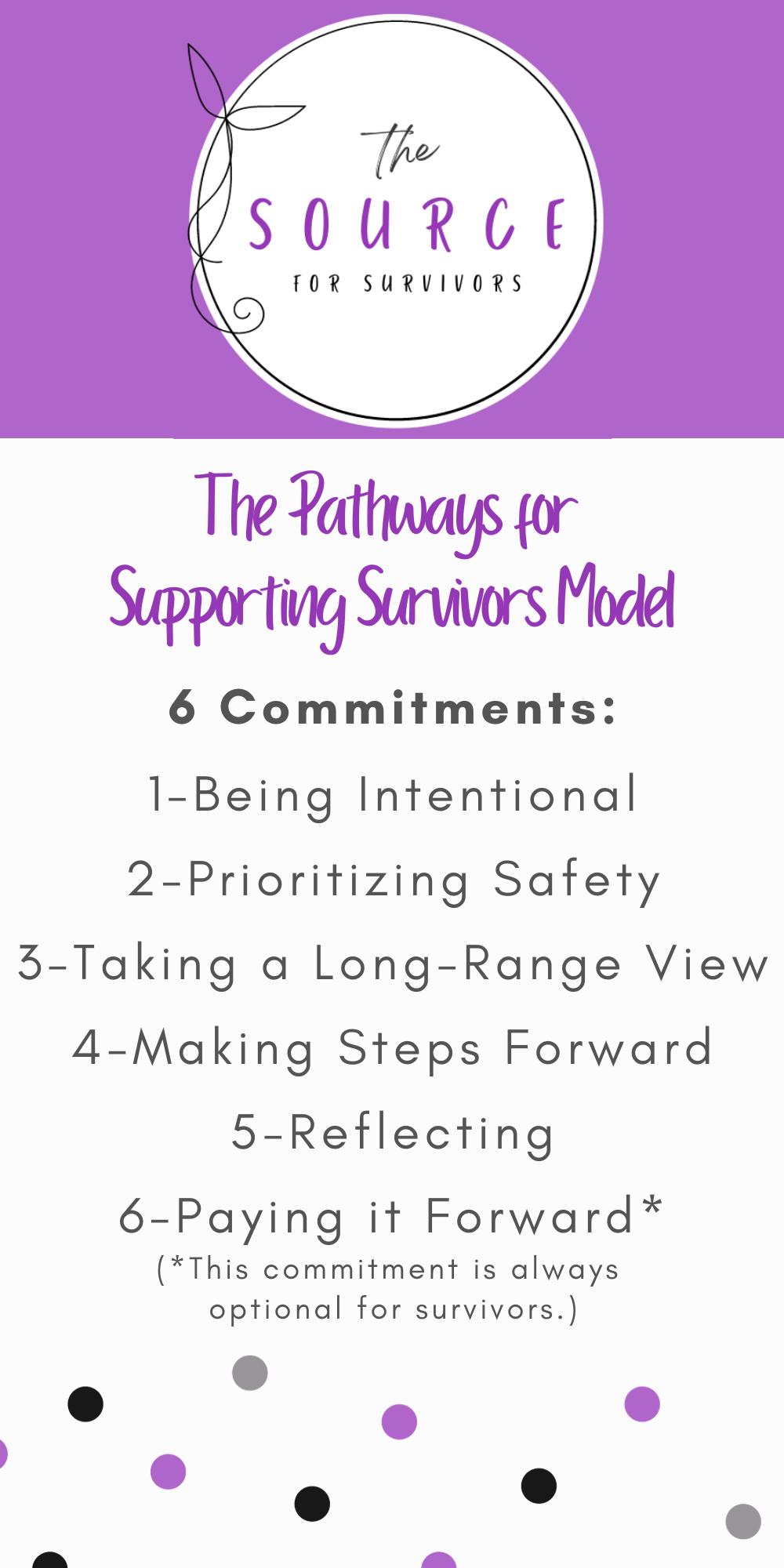
The Pathways for Supporting Survivors Model offers a holistic framework that outlines commitments to:
  1. Being Intentional
  2. Prioritizing Safety
  3. Taking a Long-Range View
  4. Making Steps Forward
  5. Reflecting
  6. *Paying it Forward (*This commitment is always optional for survivors.)

Importantly, the 6 commitments are not intended to be interpreted as sequential steps that occur in a prescribed order for survivors or community supports. Instead, each commitment is typically ongoing, occurring simultaneously and evolving over the course of time.

These commitments apply to both survivors and organizations, forming parallel journeys toward support, growth, and positive change. Within The Pathways for Supporting Survivors Model, there are two distinct journeys: (1) a Pathway for Survivors and (2) a Pathway for Organizations and Communities. Below, you will find a summary of each pathway.

Pathway for Survivors: 6 Commitments for Triumphing Over Abuse
  1. Being Intentional: Committing to being intentional with each step of your recovery journey.
  2. Prioritizing Safety: Committing to making your safety a top priority in all aspects of your life.
  3. Taking a Long-Range View: Committing to adopting a long-range perspective for your healing and growth.
  4. Making Steps Forward: Committing to taking deliberate steps forward, no matter how small, in the path to recovery.
  5. Reflecting: Committing to regular reflection as a way to understand and celebrate your progress.
  6. Paying it Forward by Helping Others: Committing to giving back and supporting others who are also on a journey to recovery (but only if you want to!). (*Note: This commitment is always optional for survivors.)

Pathway for Organizations and Communities: 6 Commitments for Being Survivor-Centered
  1. Being Intentional: Committing to being intentional about centering survivors' needs and experiences.
  2. Prioritizing Safety: Committing to prioritizing safety by adopting a trauma-informed lens at every level of your organization.
  3. Taking a Long-Range View: Committing to taking a long-range view rather than a short-term plan of action.
  4. Making Steps Forward: Committing to making steps forward through survivor-centered support.
  5. Reflecting: Committing to reflective practice and actively tracking outcomes to enhance organizational development.
  6. Paying it Forward through Collaborative, Systems-Change Efforts:Committing to paying it forward through collaborative, systems-change efforts.

More information is provided about each Pathway in the following website sections: Pathway for Survivors and Pathway for Community Supporters.
pathway for survivors
Pathway for community supporters
Picture
© The Source for Survivors. Unauthorized use and/or duplication of any material found at this web-site and blog without express and written permission from this site’s owner is strictly prohibited. Please note that The Source for Survivors is not a resource for providing personalized advice for any individual or organization, either through this website or any associated communication challenges that include but are not limited to social media, emails, or direct messages. The Source for Survivors also is not a crisis response resource. Please visit our Other Resource page for additional information, including 24/7 support resources related to domestic violence and mental health.
  • Home
  • About the Pathways Model
  • Find Your Pathway
    • Pathway for Survivors >
      • Blog - Pathway for Survivors
      • The Pathway for Survivors Mini-Journal
    • Pathway for Community Supports >
      • Blog - Pathway for Community Supports
  • Financial Abuse Recovery Book
  • Other Resources
  • About Christine Murray
  • Contact Form
  • Sign Up for Our E-Newsletter